
#1 concern for female travellers

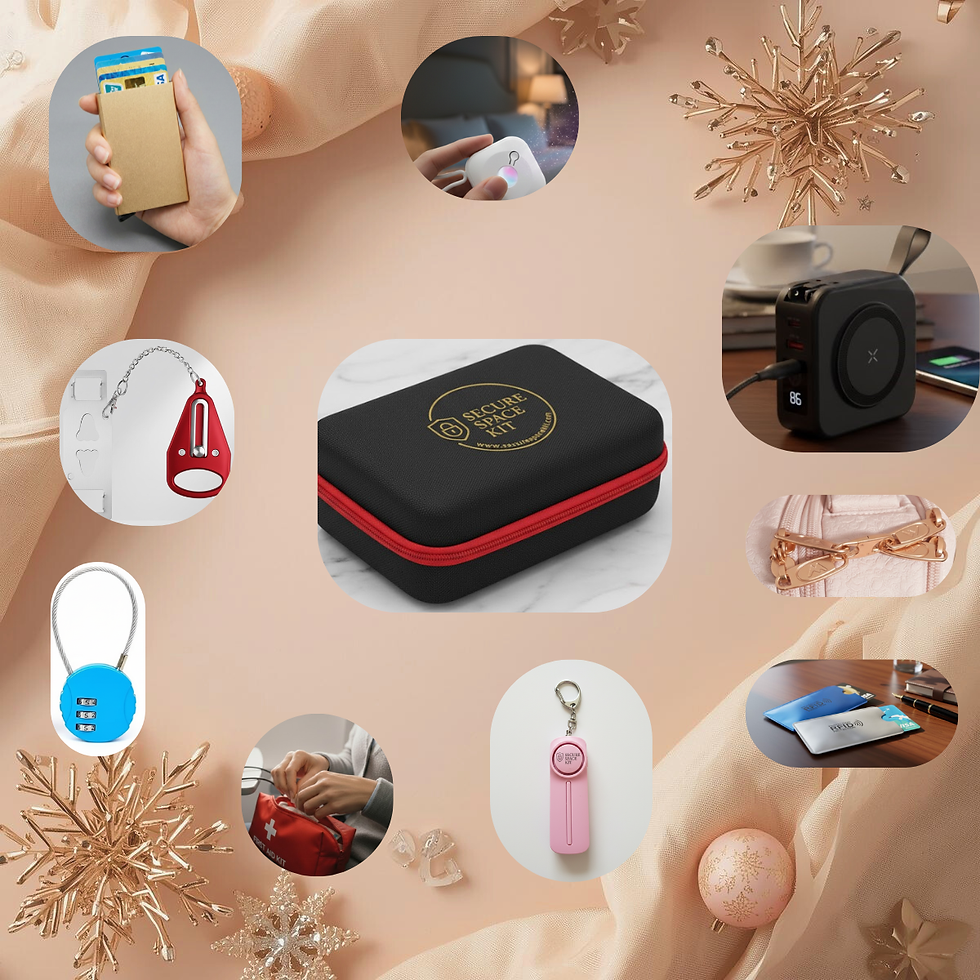
Women’s travel in 2025 is booming, but safety is still the number‑one concern for solo female travellers, with most women citing worries about harassment, crime and scams even as experience helps them feel more confident over time. A layered approach, smart planning, situational awareness and using practical tools like the Secure Space Kit, lets women travel widely while feeling prepared rather than fearful.
What the latest stats say
Surveys show around 70–84% of women list safety as their top concern before a solo trip, and about a quarter have feared for their safety in the last 12 months while traveling alone. At the same time, solo travel interest is rising fast, with roughly 40–45% of women saying they want to travel alone in 2025, driven by independence and flexible remote work.
Women worry most about gender‑based harassment, being followed or attacked, theft of bags or phones, and getting stuck in situations where no one can help quickly. Experience does help: safety worries drop significantly for women who have taken 10 or more solo trips, suggesting that skills, planning and routines build real confidence.
Global news and risk patterns
Recent advisory updates and travel reports highlight persistent risks for women around crowded transit hubs, nightlife areas and certain destinations with higher rates of sexual violence or civil unrest. Even in “safe” countries, women report issues like stalking, street harassment and discriminatory treatment (for example, being refused good tables when dining alone), which affect how welcome and secure they feel.
At the same time, there is positive movement: more “female‑friendly” hotels, women‑only group tours and better duty‑of‑care policies for business travellers are emerging, plus better tech tools like safety apps and real‑time travel risk alerts. This combination of clear risks and better resources makes it more realistic than ever to travel widely while actively managing safety instead of avoiding travel entirely.
Practical planning before you go
Research your destination’s norms, common scams and areas to avoid using official advisories and female‑travel communities (e.g., Solo Female Travelers Club, r/femaletravels).
Book accommodation with strong safety reviews, 24/7 reception where possible, and clear policies on security and guest access.
Share your itinerary and copies of key documents with a trusted person at home, and agree how and when you’ll check in (e.g., after flights, first hotel check‑in, late‑night events). We are looking at creating a Secure Safety Kit app that can help you do that! So stay tuned.
Before packing, make sure all safety tools are airline‑compliant so nothing is confiscated at security; the Secure Space Kit is curated specifically to comply with international aviation rules for carry‑on luggage. This includes non‑sharp physical locks, RFID‑blocking items, compliant batteries and a mini first‑aid kit without restricted liquids or sharps.
Safety habits in transit
In airports, stations and on buses or trains, keep valuables in a small cross‑body or money belt worn in front, and avoid placing bags behind you or loosely on seats.
Sit near other women or families where possible, and avoid isolated carriages or empty upper decks late at night.
Use pre‑booked, reputable transport (official taxis, ride‑share apps, hotel transfers), and verify the plate and driver details before getting in.
To layer tools with these habits, attach an anti‑tamper zipper lock or coded cable lock from your Secure Space Kit to day‑pack zips when in crowds, and keep your RFID‑blocking wallet or sleeves around cards to reduce the risk of skimming. Carry your personal alarm somewhere you can reach instantly (e.g., clipped to your bag strap or belt loop) rather than buried at the bottom of a backpack.
Securing your room or Airbnb
On arrival, check doors and windows, locate all locks and emergency exits, and immediately lock and latch the main door.
If anything feels off (door not closing properly, evidence of tampering, or someone loitering in the corridor), request a room change or speak to management right away.
Use “do not disturb” signs strategically so the room looks occupied, and avoid sharing your room number out loud or on social media.
Your Secure Space Kit is designed exactly for this moment: use the portable door lock on hinged doors to prevent anyone with a key entering, and pair it with anti‑tamper zipper locks or coded wire locks for bags holding passports, tech and medications inside the room. A hidden camera detector can quickly scan suspicious smoke detectors, vents, or decor items for lenses or signals, offering extra peace of mind in private rentals or unfamiliar hotels. Then hang the detector on your door handle when you are settled for a while, it will notify you if there is movement of the handle via alarm and flashing lights.
Out‑and‑about street safety
Walk with purpose, avoid wearing both earbuds, and keep your phone use intentional rather than distracted scrolling in public.
Trust your instincts: if a street, bar or interaction feels off, leave early and unapologetically, and do not worry about being “rude.”
Limit alcohol when you are alone, and watch your drink being poured; never leave drinks unattended or accept already‑opened beverages from strangers.
When out, treat your kit as “everyday carry,” not just hotel‑room gear: keep the mini first‑aid kit and power bank in your day bag so you are not stranded with a dead phone or minor injury far from your room. Use a coded wire lock to secure your bag to a fixed point in cafes or on trains when you may be distracted, making opportunistic grab‑and‑run thefts much harder.
Using tech and apps wisely
Download offline maps and key phrases translation tools so you can navigate even with patchy service, reducing the risk of getting lost at night.
Use safety or check‑in apps that share your live location with trusted contacts and let you trigger help quickly if something escalates.
Turn off geotagging on social posts while you are still at a location, and avoid broadcasting your exact hotel or nightly routine in real time. If you are in downtime and creating posts, just schedule them for a later time to post to keep your movements secure.
Pair these digital habits with your Secure Space Kit’s power bank and cables so your phone remains your strongest safety tool; aviation rules mean power banks must travel in carry‑on only, and the kit’s unit is sized to meet typical airline limits. RFID‑blocking sleeves and wallets in the kit protect cards from contactless skimming, which is an increasingly common concern in crowded tourist areas and transit hubs.
How Secure Space Kit fits a layered strategy
The Secure Space Kit range (Core, Pro and Elite) is built as an all‑in‑one, airline‑compliant travel safety set with items like a portable door lock, personal alarm, hidden camera detector, RFID‑blocking wallet or sleeves, anti‑tamper zipper locks, coded cable locks, mini first‑aid kit and travel‑safe power bank. This curation means you can work through a simple ritual in every new place: lock the door, block the door, scan the room, secure the bags, protect your cards, and charge your phone.
Used together with the habits above, the kit helps cover the main “weak spots” female travelers worry about: room intrusion, hidden surveillance, theft, card fraud and being unable to call for help. Because every item is cleared for carry‑on under aviation rules, you can keep your full safety setup with you from the moment you leave home to the moment you return, instead of relying on whatever is available at each destination.


Comments